
As the old saying from Lao Tzu goes: “The journey of 1,000 miles begins with a single step.” The good news is that none of us are alone and there are plenty of places to start.
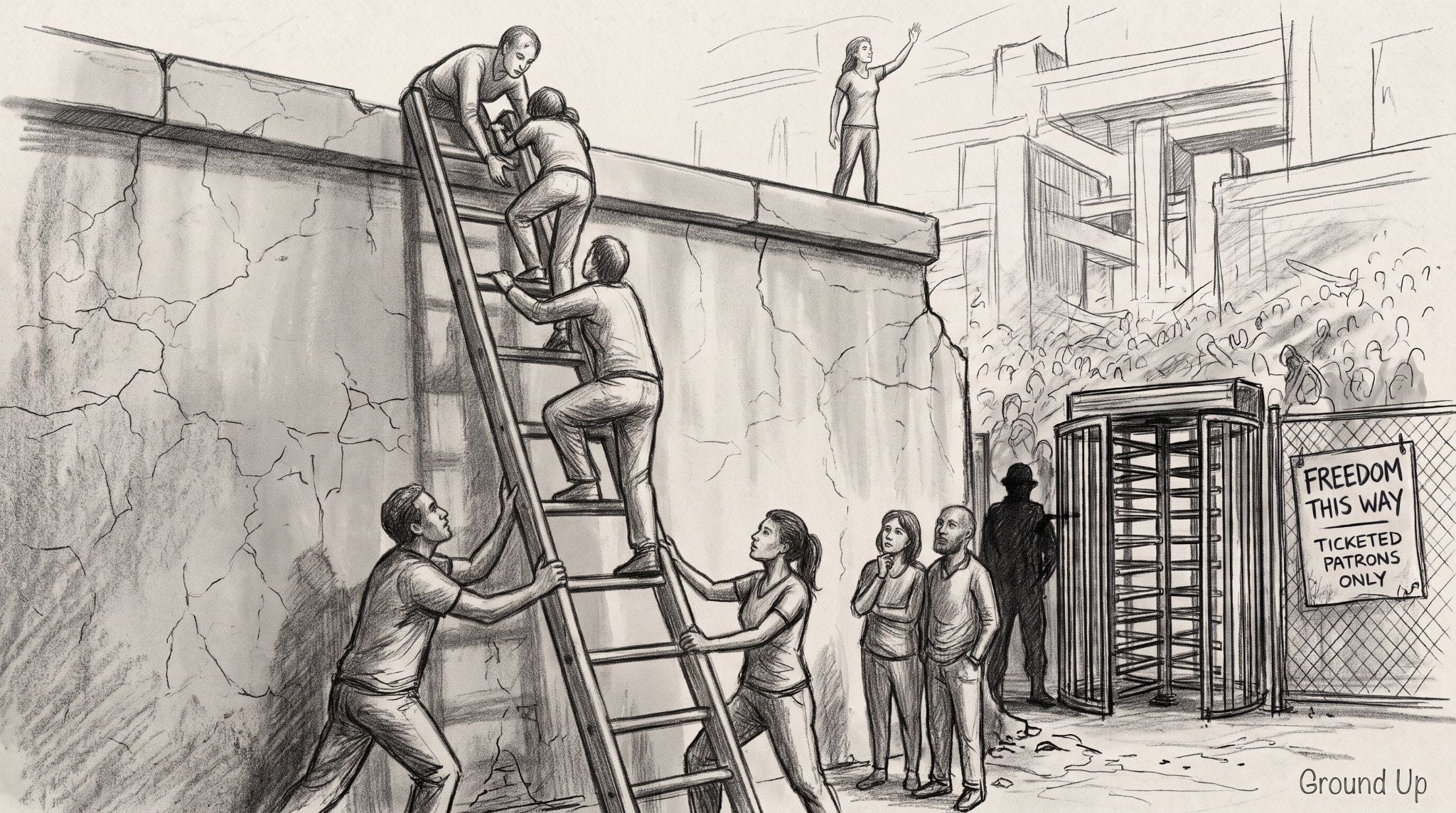
So to help find a foothold on the ladder of engagement from my last essay (How the Paths Begin), I put together a list. It obviously is incomplete, but even in its embryonic form there are durable spots at each rung.
This essay is part of a series that started with my essay The Garden of Converging Paths.
The list leans toward the U.S., the UK and Germany, but many entries are directories, so hopefully you can find something nearby. It obviously is incomplete and I welcome submissions to strengthen the list.
Rung 1: Fix something together
This is the level that helps build connection at a personal level with low stakes and no commitment engagement. Repair Cafés are the anchor, but it extends to other organizations that bring people together.
Repair Café International: the Amsterdam-born network offers a directory of fix-it sites around the world (over 4,000 as of 10 Nov. 2026) and a manual for starting your own.
Makerspace Directory: a global guide to spaces for DIY innovators, tinkerers, and inventors from Albania to Vietnam. This is for people more interested in making new stuff.
Local Tools: a guide to finding or starting a tool library or Library of Things. It links to the Tool Library Alliance map of U.S. tool libraries and to Shareable’s Library of Things toolkit.
American Community Gardening Association garden finder: a U.S. map of community gardens, with a form to add yours and pointers to local garden networks.
Netzwerk Urbane Gärten Berlin: a directory of community gardens in the German capital.
The Buy Nothing Project: the digital platform connects neighbors to gift each other goods and services through volunteer-run groups and an app
Other first rungs worth adding include swap shops and neighborhood meals.
Rung 2: Own something together
This goes from stuff to shelter and challenges the concept that property is an asset class like any other. It’s a bigger commitment and might not be for everyone.
There’s no harm in skipping rungs, but awareness that these opportunities exist helps build the pathways by showing that alternatives are available.
In addition to housing, there are other second rungs such as worker cooperatives and other forms of co-ownership like community-owned shops, energy co-ops and credit unions.
CLT Map and Directory: the International Center for Community Land Trusts lists 627 community land trusts in at least 14 countries. The group admits that the list is not comprehensive, so suggest a missing one.
Mietshäuser Syndikat: the German network helps resident groups buy buildings and take them off the speculative market. The site lists 215 projects and 15 initiatives still looking for property, as of 10 Nov. 2026.
National Cohousing Alliance: the U.S. organization (formerly CohoUS) offers a directory of established and forming cohousing communities, plus help for finding others to start a group.
UK Cohousing Network: a directory of UK communities, with 65+ more groups in development. It also links to cohousing networks abroad.
Worker Co-op Directory: the joint project of the U.S. Federation of Worker Cooperatives and the Democracy at Work Institute lists 489 worker coops, democratic workplaces and support organizations as of 10 Nov. 2026.
Rung 3: Decide together
Personal decisions over stuff we own and where we live builds a foundation for the next rungs, which shift to community issues. But no one has to go through rungs one and two before taking part in joint deliberation over issues that affect our own lives and our neighbors’. The structure for this is citizens’ assemblies and other ways of giving ordinary people a real say.
Assembling an Assembly: DemocracyNext offers a step-by-step guide to planning, running and following up a citizens’ assembly. It includes templates and links to the OECD and other resources. The group also has reading lists and a list of academic research centers.
Mehr Demokratie: the German campaign group has a directory of assembly organizations by country, plus a database of German assemblies and links to service providers such as the Sortition Foundation, which organize democratic lotteries.
Citizens’ Assembly (Ireland): the official site for the six Irish assemblies since 2013, with reports and the archive. It notes that no assembly is currently running.
People Powered: a global hub for participatory democracy, including participatory budgeting, with a resource center, a playbook and a member community.
Other third rungs worth adding: participatory budgets, neighborhood councils and tenants’ associations.
Rung 4: Work together
This is scaling up to leverage community action into networks that have weight and can lobby for legislative changes that make lower rungs easier.
Transition Network: a charity supporting a community-led movement that began in Britain and Ireland in 2006 and now spans 67 countries. Its map shows 962 groups around the world as of 10 Nov. 2026.
U.S. Federation of Worker Cooperatives: founded in 2004, the federation works to connect co-ops and advocate for shared ownership of businesses.
Platform Cooperativism Consortium: the New York-based hub for research, community building, and advocacy for digital co-ops has sister organizations in Japan, Hong Kong, Sweden, Australia, Germany and Italy. It also maintains a directory with 638 projects in 53 countries as of 10 Nov. 2026 .
The Democracy Collaborative: a research and action group on community wealth building, including how regions build ecosystems for co-ops.
Coalition for a Global Citizens’ Assembly: works toward a permanent global assembly, listed in Mehr Demokratie’s international directory.
Help expand the rungs
This list is only as strong as readers make, so please help fill in the gaps. To add an initiative, leave a comment on the post or message me with:
name of the organization and a link
which rung it fits (1 to 4)
one sentence on what it does and where
It helps to run it through the four questions from the previous post: who actually decides, who’s missing, what stops it from being captured, and does it connect outward. I’ll do my best to keep this updated.
cool list